
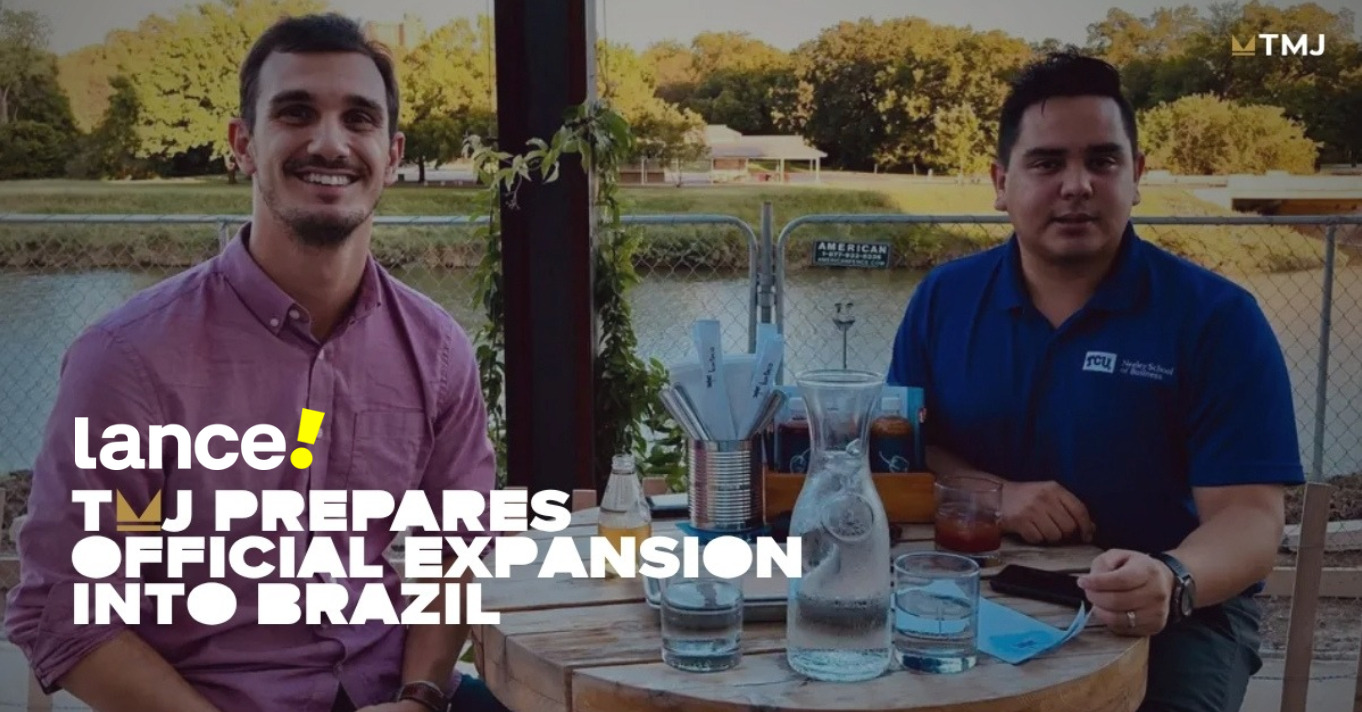
Article originally published in Lance, one of the biggest daily sports media outlets in Brazil. Read here. Written by Giselly Corrêa. It has been translated and condensed for clarity.
July 24, 2026 – TMJ is preparing its official entry into the Brazilian women’s football market. Founded in the United States, the company represents athletes from more than 19 countries and works exclusively with players and professionals within the women’s football industry.
In their portfolio, there are names such as Luisa Agudelo, the [former] San Diego Wave and the Colombian national team player, the jewel Claudia Martínez, of Washington Spirit, and Daniela Arias, ex-Corinthians.
For the next few years, the agency intends to expand its operations in Brazil, so far consisting of intermediation services in international transfers, and sees the country as a centerpiece in the global development of women’s football. To date, together with partners such as Transfer Soccer and Arts Sports, TMJ has participated in negotiations involving Brazilian players such as the defenders Isa Haas and Mariza, in addition to the striker Aline Gomes.
This story opens a special series from Lance! on the transfer market in women’s football. Throughout the next publications, agents, companies and professionals working in the negotiations of athletes will be highlighted, as well as discussing the way the market functions, its challenges and the opportunities that drive the growth of the sport.
THE START OF TMJ
The founders Guillermo Zamarripa and Oscar González met at a university in New York and went on to work on recruiting athletes to U.S. universities. Their contact with college football players in the country helped pave the way for post-college career management work. The first professional contract negotiated by Zamarripa was that of Mexican striker Charlyn Corral in 2014 when she left the United States to play in Europe. From there, other athletes began to look for the agency in search of opportunities in professional football.
“We decided to really invest in women’s football. The history of TMJ is a story of investment, of believing in the sport and of being patient,” said Guillermo Zamarripa, in an exclusive interview with Lance!.
Today, the agency has about 300 athletes in its portfolio and maintains a structure formed by 36 professionals who work exclusively with women’s football. According to Zamarripa, specialization is one of the main differentials of the project.
BRAZIL ON THE HORIZON
Brazil has been part of TMJ’s plans for years. The Brazilian Vinícius Peron, who is part of the project, said that the intention to work in the country also arose during an MBA program held in the United States, when he met Zamarripa.
“He always told me that his dream was to enter Brazil and help Brazilian players have better opportunities. Now we understand that it is the right time for this,” [Peron] said.
For the agency, Brazilian women’s football is still far from reaching its potential in the international market. TMJ expects the country to become the biggest exporter of women’s football talent in the coming years.
“We visualize Brazil as the largest exporter of talent in the world. Even if the World Cup didn’t happen here, our strategy would be the same. We will invest in the market because we believe in it,” said Zamarripa.
The agency’s assessment is that Brazilian players garner characteristics that make them attractive for different markets. According to Zamarripa, leagues such as the [NWSL] prioritize physical aspects, while Spanish football values technical and tactical issues more. In his view, Brazilian athletes can meet different club profiles, which expands the possibilities of transfer.
The growth of Mexican football’s interest in Brazilians also applies. The Liga MX Femenil, which in recent years has expanded its investments, has become an increasingly frequent destination for athletes from Brazil.
“The Liga MX Femenil is not just a step in the players’ career. Today it is a very well-established market, with a calendar similar to the Brazilian, cultural proximity and financial capacity to pay transfer fees,” explained Vinícius.
WORLD CUP EXPECTED TO ACCELERATE GROWTH OF WOMEN’S FOOTBALL
Plans for the next few months
TMJ shared it has also finalized the details to officially announce the start of its operations in Brazil. The expectation is to formalize the entry into the market in the coming months, although the agency already participates in negotiations involving Brazilian athletes.
In five years, the company’s goal is to consolidate itself as one of the most impactful agencies in Brazilian women’s football. For this, it intends to work in partnership with clubs, athletes, and professionals in the market, in addition to investing in long-term planning for the careers of the players.
“We want to do this in the right way. Being in the market, building relationships and adding our global platform to the growth of Brazilian women’s football,” concluded Zamarripa.